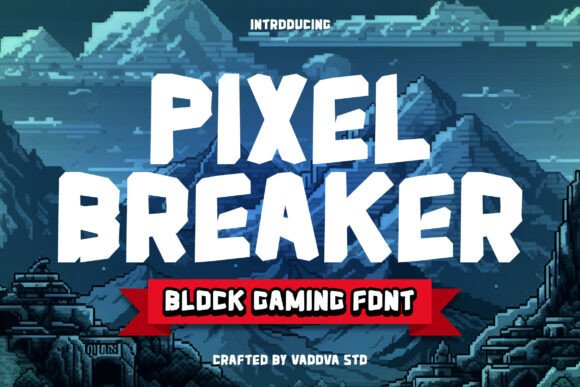
Pixel Breaker: Capturing the Arcade Spirit in Modern Digital Design
In the ever-evolving landscape of digital aesthetics, where sleek minimalism and hyper-realism often dominate, a powerful counter-movement has taken hold, driven by nostalgia, authenticity, and a desire for unapologetic impact. This resurgence of retro sensibilities is not merely a fleeting trend but a strategic design choice, particularly within the gaming, esports, and broader digital entertainment sectors. At the heart of this movement is typography, and few typefaces embody its core principles as effectively as Pixel Breaker. This bold, block-style gaming font is more than a collection of letters; it is a deliberate homage to the arcade era, engineered for the demands of contemporary media.
Understanding the Pixel Breaker Aesthetic
Pixel Breaker presents a bold block-style gaming font with sharp geometric construction and a strong arcade-inspired character. Its design philosophy is rooted in the visual language of 1980s and 90s coin-operated machines and early console graphics. The features chunky letterforms with a pixelated influence, creating a bridge between the digital past and the high-resolution present. This is not a simple bitmap font; it is a vector-based typeface that retains the gritty, energetic texture of pixel art while offering the scalability and editability required for modern projects. The dynamic and energetic visual impact is immediate, making it a tool for grabbing attention in crowded digital spaces.
The Anatomy of a Modern Retro Font
The construction of Pixel Breaker is intentional. Each glyph is built on a grid, a direct nod to the constraints that defined classic game typography. However, the design team has refined these forms for clarity and versatility. The sharp geometric construction ensures legibility at various sizes, from large poster headlines to smaller UI elements in mobile games. The strong arcade-inspired character is not just in the shapes but in the implied motion and weight of the letters. This font doesn't just sit on a page; it feels like it's ready to power up, fitting seamlessly into game development projects, esports team branding, and streaming graphics where energy is paramount.
Contextualizing Pixel Breaker in Current Design Trends
The relevance of a typeface like Pixel Breaker is best understood within the context of several converging trends. Firstly, the nostalgia economy is a potent force. A significant demographic of gamers, now professionals and creators, grew up with the 8-bit and 16-bit eras. For them, this aesthetic is not retro; it's a foundational part of their visual identity. Using Pixel Breaker in branding or interface design for an indie game studio or a retro-themed streaming channel is an act of cultural communication. It signals authenticity and connects with an audience on an emotional level that polished, generic fonts cannot.
Secondly, the rise of esports and live-streaming culture has created a demand for visual assets that are both impactful and highly customizable. Teams, tournaments, and individual streamers need branding that stands out in a thumbnail, looks great on merchandise, and works across overlays and social media graphics. Pixel Breaker, provided in standard font formats and fully editable, meets this need perfectly. Its bold, playful style cuts through visual noise, while its compatibility ensures it can be integrated into any workflow, from Adobe Creative Suite to game engines like Unity or Unreal, without additional plugins.
Meeting the Needs of a Diverse Creator Economy
The modern creator, entrepreneur, or freelancer operates in a multi-platform environment. Their visual identity must be consistent whether it's on a YouTube channel banner, a mobile game splash screen, a promotional poster, or a website header. Pixel Breaker's versatility is its key strength here. It is ready for digital and print use, allowing a small business to use the same core typography for its online ads and its physical event banners. This consistency builds brand recognition. For marketers, the font's inherent energy makes it ideal for promotional visuals aimed at younger demographics or gaming communities, conveying excitement and a "player-centric" attitude.
Practical Applications and Creative Workflows
The true test of a typeface lies in its application. Consider an indie developer crafting a new arcade-style shooter. Using Pixel Breaker for the game's title, menu screens, and in-game score displays instantly establishes a cohesive, retro-modern aesthetic. The font's chunky letterforms are ideal for on-screen prompts that need to be read quickly without sacrificing style. For an esports team, the name rendered in Pixel Breaker carries a built-in sense of competition and digital prowess, perfect for jerseys, social media profiles, and tournament graphics.
For digital interfaces, particularly in mobile games or apps with a gamified element, the font can guide user experience. Its strong visual weight makes it excellent for call-to-action buttons ("START," "PLAY," "CLAIM") or important notifications. In the realm of creative media, graphic designers and freelancers can leverage it for poster headlines, album covers for electronic music, or branding for tech startups that want to project an image of innovation and disruptive energy. The font's ability to be fully editable means designers can adjust kerning, leading, or even modify letterforms to create unique logotypes, ensuring their work remains distinctive.
The Future of Playful, Impactful Typography
As digital experiences become more immersive and personalized, the role of typography in shaping brand personality and user emotion will only grow. The demand for typefaces that carry a strong narrative or emotional resonance—like the arcade-inspired character of Pixel Breaker—is increasing. We are moving beyond fonts as mere utilitarian tools towards them as essential components of storytelling and brand experience.
Furthermore, the blurring lines between gaming, entertainment, and everyday technology mean that the visual language of gaming is no longer confined to the screen. It influences fashion, product design, and advertising. A font like Pixel Breaker is at the forefront of this crossover. It allows creators in any field to inject a dose of digital rebellion and playful energy into their projects. Whether it's for a new indie game, a dynamic streaming brand, or a cutting-edge marketing campaign, this typeface provides a direct, bold, and impactful way to communicate in a style that resonates deeply with contemporary audiences. Its construction ensures it remains relevant, not as a relic, but as a living piece of digital design evolution.