Florium: Exploring the Decorative Font Duo for Creative Projects
In the vast landscape of typography, selecting the right typeface often involves balancing legibility with personality. For designers working on projects that require a distinct botanical or whimsical aesthetic, standard sans-serifs or serifs often fall short. This is where specialized typefaces, such as the Florium font duo, enter the conversation. Florium is not merely a single font but a combination of a decorative typeface and a set of dingbats, specifically designed to inject floral elegance into visual compositions.
Understanding the specific utility of Florium requires looking beyond standard typography metrics. It is designed to serve a niche but popular market: floral design. This article explores the characteristics of Florium, how it functions as a creative tool, and the practical considerations designers should weigh before integrating it into their workflow.
Understanding the Florium Concept
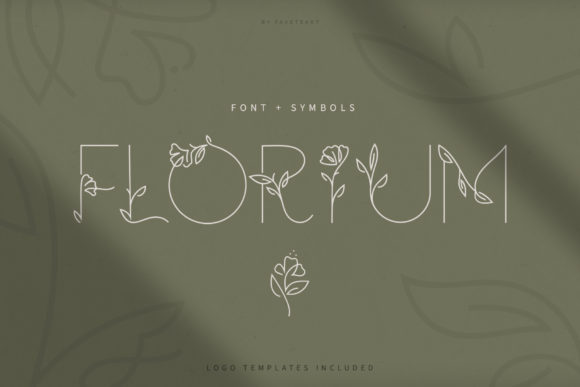
At its core, Florium is characterized by its integration of botanical elements directly into the letterforms. Unlike traditional typefaces where the priority is uniformity and readability at small sizes, Florium prioritizes style and ornamentation. The characters are often described as elegant and stylish, featuring curves and swashes that mimic vines, leaves, and petals.
The "duo" aspect of Florium is a significant feature that distinguishes it from standalone decorative fonts. Typically, a font duo consists of two complementary typefaces. In the case of Florium, the primary draw is the pairing of a decorative script or serif with a set of dingbats (pictorial symbols). This combination allows for a cohesive design language; the floral elements found in the dingbat set are stylistically aligned with the flourishes in the main font. This ensures that the typography and the illustrations do not clash, creating a unified visual identity for the project.
The Role of Dingbats in Floral Typography
Dingbats are often overlooked in modern design discussions, yet they remain a powerful resource for rapid asset creation. In the context of Florium, the dingbat set usually includes standalone floral motifs, corner decorations, and dividers. For a designer, this means that creating a matching border or a decorative break between paragraphs does not require switching to illustration software. It can be done directly within the typesetting interface, which streamlines the workflow significantly for layout-heavy projects like wedding invitations or greeting cards.
Evaluating Strengths and Tradeoffs
When evaluating a typeface like Florium, it is helpful to view it through the lens of utility versus versatility. The strengths of Florium lie in its specific aesthetic appeal. It excels in scenarios where the visual impact of the text is more important than the speed at which it is read.
Where Florium Excels
Florium is particularly effective for "hero" text—titles, headers, and logos that need to capture attention immediately. Because the characters are filled with floral decorations, they act as both text and illustration. This dual functionality is highly valued in specific sectors:
- Event Stationery: For wedding invitations, save-the-dates, and menus, the romantic and organic feel of Florium aligns perfectly with the subject matter.
- Branding for Artisanal Goods: Small businesses dealing in cosmetics, perfumes, or boutique clothing often use floral motifs to convey luxury and natural ingredients.
- Greeting Cards: The celebratory nature of the font makes it ideal for birthday cards, Mother’s Day designs, and holiday greetings.
Limitations and Readability
The primary tradeoff with a highly decorative typeface like Florium is legibility. Because the letterforms are complex, they can become difficult to parse when used at small sizes or in long blocks of text. The intricate details that make the font beautiful at 72pt can turn into visual noise at 12pt. Therefore, Florium is rarely a good choice for body copy or legal disclaimers where clarity is paramount.
Furthermore, the "busy" nature of the font means it competes for attention. If the background of a design is also complex—such as a detailed photograph or a textured pattern—the text may get lost. Florium generally requires ample white space or a simple background to truly shine.
Comparing Florium to Other Styles
When choosing a typeface for a project, designers often compare decorative options like Florium against other categories. Understanding these differences helps in making an informed decision about whether Florium is the right tool for the job.
Florium vs. Standard Serifs
Standard serif fonts, such as Garamond or Times New Roman, convey tradition and formality. While they can be used for elegant projects, they lack the organic, hand-drawn quality of Florium. If the goal is a corporate law firm’s letterhead, a standard serif is superior. However, if the goal is a vintage botanical poster, Florium offers a level of thematic relevance that a standard serif cannot match.
Florium vs. Modern Scripts
Modern calligraphy scripts are often used for similar projects as Florium. However, scripts tend to mimic the flow of handwriting and connect letters. Florium, depending on its specific construction, may function more as a standalone decorative serif or a disconnected display face. The advantage of Florium over a fluid script is often stability; complex scripts can sometimes look messy, whereas a structured decorative font maintains a cleaner baseline while still offering flair.
Florium vs. Hand-Lettering
Custom hand-lettering is the ultimate bespoke solution, but it is time-consuming and expensive. Florium serves as a practical middle ground. It offers a "hand-crafted" aesthetic without the need for a calligrapher or illustrator to draw every instance of the text. For projects with limited budgets or tight timelines, Florium provides a stylistic shortcut that maintains a high-quality appearance.
Practical Application and Best Practices
For those considering Florium, applying a few design principles can maximize the font's impact while mitigating its weaknesses.
Pairing Strategies
One of the most effective ways to use a decorative font is to pair it with a neutral companion. Since Florium is visually heavy, it pairs best with simple sans-serif fonts for subheadings or body text. For example, using Florium for the main title of a poster and a clean, geometric sans-serif for the date and location creates a hierarchy that guides the eye. This contrast allows the decorative elements to stand out without overwhelming the viewer.
Color and Spacing
Because the characters in Florium are detailed, letter-spacing (tracking) is crucial. Tight tracking can cause the floral details of adjacent letters to merge into an unreadable blob. Increasing the tracking slightly can help define individual characters. Additionally, using high-contrast color schemes—such as dark text on a light background or vice versa—helps preserve the integrity of the intricate shapes.
Decision Factors: Is Florium Right for You?
Choosing a typeface is ultimately a decision about fit. To determine if Florium aligns with your needs, consider the following questions:
- What is the primary function of the text? If the text must be read quickly and efficiently (e.g., a user interface or a manual), choose a different option. If the text is meant to be admired as a piece of art (e.g., a logotype or header), Florium is a strong candidate.
- What is the overall theme? Florium is explicitly botanical. If your project is industrial, tech-focused, or minimalist, the floral decorations will feel out of place.
- Do you need integrated graphics? If your project requires matching floral icons or borders, the included dingbats make Florium a highly efficient choice compared to sourcing separate illustration assets.
In conclusion, Florium represents a specific solution within the typography ecosystem. It is not a universal workhorse but rather a specialized tool for creative minds. By understanding its strengths in decorative design and its limitations in readability, designers can effectively leverage Florium to add life and elegance to their floral and artistic projects. Whether used for a full wedding suite or a single impactful logo, its value lies in its ability to combine text and illustration into a singular, cohesive style.