Couep: Power Up Your Digital Presence with High-Voltage Design
In the crowded digital landscape, first impressions are forged in milliseconds. A brand's visual identity must do more than simply exist; it needs to communicate energy, innovation, and a distinct personality at a glance. This is where the choice of typography becomes a critical strategic decision. A typeface is not merely a vessel for words but the very voice of a brand, setting the tone before a single sentence is read. For those operating in fast-paced, tech-forward arenas, the right font can be the difference between blending in and commanding attention.
Capturing a Cyber-Connected Soul
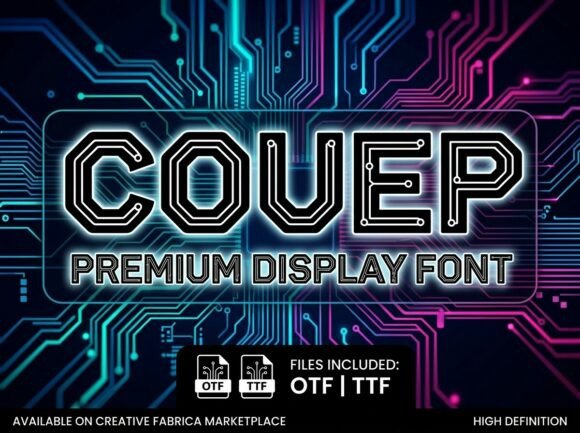
Couep is a high-voltage display typeface engineered for this exact purpose. It is not a standard font with a futuristic skin; its very architecture embodies the digital age. The design is built on bold, geometric letterforms that provide a strong, stable foundation. However, the true innovation lies within those forms. Each character is filled with a dense, intricate tapestry that mimics the rhythmic pathways of a circuit board and the precise nodes of a microchip. This internal detail is not random clutter but a carefully crafted pattern suggesting connectivity, data flow, and complex technology. Containing this intricate detail is a clean, glowing neon outline, ensuring legibility while amplifying the font's electric aesthetic. The result is a typeface with heavy structural weight and an unmistakably futuristic personality, designed to make an immediate and powerful impact.
Practical Applications for Maximum Impact
The specific design of Couep solves a common problem for creators and businesses: how to visually articulate a connection to technology, gaming, or digital innovation without resorting to clichés. Its value is most evident in targeted applications where visual shorthand is essential.
- Independent Esports Branding: For esports teams, streamers, and tournament organizers, branding needs to convey speed, competition, and a deep understanding of gaming culture. Couep's circuit-board interior and neon glow directly reference the hardware and digital environments central to the sport. Using it for team names, logos, or stream overlays instantly signals authenticity and high-energy performance to a discerning audience.
- Cyber-Security Logos and Materials: In the field of cyber-security, trust and technological prowess are paramount. A logo using Couep communicates sophisticated, proactive defense. The embedded circuit patterns suggest layers of protection and intricate network monitoring, while the bold weight conveys strength and reliability. It helps a security startup or consultancy project an image of cutting-edge capability.
- Hardware Technology Startups: A company developing new hardware—be it consumer electronics, IoT devices, or components—needs a brand identity that reflects the physicality and innovation of its products. Couep's design bridges the gap between the physical product and the digital ecosystem it enables. It's particularly effective for crowdfunding campaigns, product launch pages, and packaging where immediate visual impact is crucial.
- Digital-Dominance Social Media Headers: On platforms like Twitter, LinkedIn, or YouTube, a header image is prime real estate. A static, uninspired banner fails to leverage this space. Using Couep for key text in a header creates an unforgettable first impression. It grabs the scrolling user's attention, communicates the brand's niche instantly, and establishes a memorable visual theme that can be carried through other content.
Who Stands to Gain the Most?
While any designer can appreciate a well-crafted font, Couep's benefits are most pronounced for specific audiences. Professionals, creators, and entrepreneurs in the technology, gaming, and digital services sectors will find it a particularly valuable tool. Marketers and bloggers covering these industries can use it to add visual authority to their content. Educators and freelancers specializing in tech topics can employ it to make their materials more engaging and relevant. For small business owners launching a tech product or service, it offers a way to compete visually with larger players from day one. Even hobbyists in areas like PC building, game development, or electronics can use it to give their projects a professional, polished look.
The underlying reason is alignment. Couep doesn't just look "cool"; its aesthetic is semantically loaded with meaning relevant to these fields. It saves the creator the effort of explaining their brand's tech-centric focus—the font itself does much of that communicative work. This can streamline the design process and lead to more coherent branding outcomes.
Integrating Couep into Your Design Workflow
Adopting a new typeface requires thoughtful integration. Couep is a display typeface, meaning it is designed for headlines, logos, and short bursts of impactful text, not for body copy. Its intricate details would become overwhelming and difficult to read in long paragraphs. The best practice is to use it as a focal point.
- Pairing with Simplicity: Combine Couep with a clean, neutral sans-serif or monospace font for body text, descriptions, and UI elements. This creates a necessary contrast, allowing Couep's complex details to shine without causing visual fatigue. The pairing ensures readability while maintaining the high-tech aesthetic.
- Color and Context: The font's neon outline suggests a dark background for maximum effect, mimicking a screen in a dim room. Using it on dark grays, deep blues, or black allows the "glow" to appear luminous. Experiment with color accents that match the neon outline for buttons or highlights to create a cohesive system.
- Scale and Breathing Room: Because of its detailed interior, Couep benefits from being used at a larger scale. Ensure there is ample surrounding space (white space) to prevent it from feeling cramped. This allows the viewer to appreciate the intricate patterns within each letterform.
Considering the Right Fit
No single font is the perfect solution for every project. Couep's powerful personality is its greatest strength, but it is also a consideration. Its strong thematic presence means it is not a universal workhorse. For projects requiring a subtle, neutral, or traditional tone, Couep would likely be overwhelming. It is explicitly designed to make a statement.
Furthermore, while the internal detailing is a key feature, it may present challenges in very small sizes or low-resolution printing, where the patterns could blur. Always test the font in the intended medium and size. For legal documents, academic papers, or brands in sectors like healthcare or luxury goods that prefer understated elegance, other typefaces would be a more appropriate choice. The decision to use Couep should be a deliberate one, aligning the font's inherent character with the brand's core message and audience expectations.
Ultimately, Couep is a specialized tool for a specific job: to inject a digital, energetic, and connected soul into a brand's visual identity. When used thoughtfully, it does more than just spell out a name—it broadcasts an entire ethos of innovation and digital mastery. For those whose work lives at the intersection of technology and creativity, it offers a powerful way to ensure their presence is not just seen, but felt.