Motac: Integrating a High-Impact Decorative Font into Your Creative Workflow
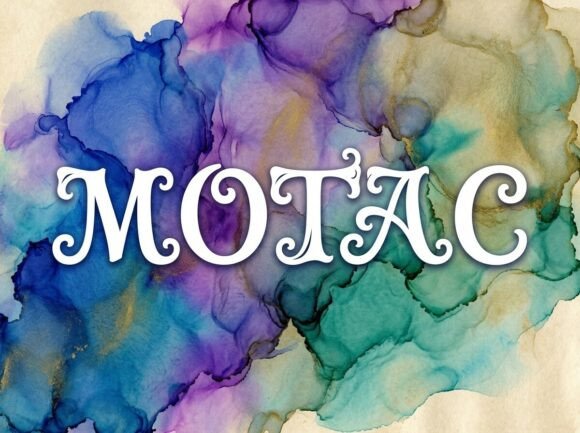
In the world of design, typography is not merely about selecting characters; it is about choosing a voice for your visual communication. When a project demands a bold statement—whether it is a logo, a poster, or packaging—the typeface you select must carry significant weight. This is where Motac enters the conversation. It is a stunning decorative display font specifically engineered to be the center of attention. Unlike standard sans-serifs or body text fonts, Motac features unique artistic elements and a strong visual personality, making it an essential asset for creators looking to break away from the ordinary.
However, possessing a high-quality font file is only the first step in a long design process. To truly leverage Motac, professionals must understand how to integrate it into their existing workflows, manage its technical requirements, and apply it where it yields the highest return on investment. This article explores the practical implementation of Motac, detailing how to prepare for its use, manage its compatibility, and execute projects with professional precision.
Understanding the Asset: What Motac Brings to the Table
Before integrating any new asset, you must understand its specifications and limitations. Motac is a decorative display typeface. In typography terms, a display font is intended for large sizes, such as headlines or titles, rather than long-form body text. Its primary strength lies in its visual personality; the letterforms are designed to be works of art in their own right.
A critical factor to note during the planning phase is that Motac is an ALL-CAPS typeface. It does not include lowercase letters. This is not a defect, but a deliberate design choice. All-caps fonts create a uniform baseline and cap height, resulting in a rectangular, block-like visual rhythm. This structure is ideal for creating a sense of authority, stability, and impact. For designers, this means that Motac is best utilized for specific purposes:
- Bold Headlines: Titles that need to grab immediate attention.
- Artistic Logos: Brand marks that require a distinct, memorable shape.
- Creative Packaging: Product labels where shelf appeal is the priority.
- Decorative Initials: Drop caps in editorial layouts to anchor a page.
By recognizing that Motac is designed for "high-impact" moments, you can reserve it for the right stage of your project, ensuring it complements rather than overpowers your layout.
Technical Preparation and File Management
A smooth workflow relies on technical compatibility. Nothing disrupts a creative flow faster than software errors or missing font files. When you acquire Motac, you receive two primary file types: OTF (OpenType Font) and TTF (TrueType Font). Understanding the difference is key to efficient project setup.
Choosing Between OTF and TTF
The OTF file is the professional standard for advanced design and layout software. If you are using tools like Adobe Illustrator, InDesign, or Photoshop, the OTF file is your primary choice. It supports more advanced typographic features and offers better compression and cross-platform compatibility for professional printing.
The TTF file is the standard for universal compatibility. If you are working in environments that may not fully support OpenType features—such as older operating systems, certain web builders, or basic word processors—the TTF file ensures the font renders correctly. For most digital workflows, installing the OTF version is sufficient, but keeping the TTF file in your archive ensures you have a fallback for legacy systems or specific client requirements.
Installation Workflow
Integrating Motac into your system should be a one-time setup task. To maintain organization:
- Download and Unzip: Extract the files from the provided zip folder.
- Font Book Management: On macOS, double-click the OTF file and select "Install Font." On Windows, right-click the file and select "Install for all users" to ensure it is available across all applications.
- Restart Applications: Most design software requires a restart to refresh the font cache. Ensure you close and reopen your design tools before beginning a project.
Strategic Application: Integrating Motac into Projects
The true value of a font like Motac is realized when it is applied strategically within a broader design context. Because it is a decorative display font, it pairs best with cleaner, more neutral typefaces. The contrast between Motac’s artistic flair and a standard sans-serif creates a visual hierarchy that guides the viewer's eye.
Logo Design and Branding
When using Motac for logos, the process involves more than just typing out a brand name. Because the font has a "strong visual personality," it does much of the heavy lifting for the brand's tone. However, logos often require scalability. While Motac is perfect for the primary logo mark, you must ensure the design remains legible at smaller sizes. A practical implementation tip is to create two versions of a logo: one utilizing Motac for the main masthead and a simplified version for favicons or small print, where the intricate details of the decorative font might get lost.
Packaging and Merchandise
For creators working on packaging, Motac serves as a focal point. In a workflow involving physical products, the font interacts directly with the material. For example, if you are designing a coffee bag or a cosmetic box, Motac can be used for the product name. However, you must consider the printing method. Highly decorative fonts can sometimes fill in (bleed) if printed on rough textures or at very small point sizes with certain inks. Always request a proof or test print to ensure the "artistic elements" of the letters remain distinct and do not clog.
Digital Content and Social Media
In the fast-paced environment of social media, stopping the scroll is the primary objective. Motac is an excellent tool for creating "thumb-stopping" graphics. When designing Instagram stories or YouTube thumbnails, use Motac for the hook—the one or two words that summarize the content. Pair it with a simple background to avoid visual clutter. The font's inherent style reduces the need for excessive graphic elements, streamlining the design process and reducing file sizes.
Quality Control and Consistency
As you move through the execution phase of a project, consistency is paramount. If you use Motac for a headline on a website, the tracking (letter-spacing) and kerning (space between specific pairs) should be checked manually. While modern software handles this automatically, decorative fonts sometimes require manual adjustment to ensure the artistic ligatures align perfectly with the surrounding whitespace.
Furthermore, because Motac is uppercase only, you must plan your copy accordingly. This requires a shift in the writing process. If you are a content creator or marketer, you cannot simply paste a sentence-case paragraph into a design using Motac; it will automatically render in capitals. This can actually be beneficial for brevity, forcing you to distill your message into concise, powerful headlines. However, ensure that your body text—written in a complementary, legible font—provides the necessary context that the headline cannot.
Long-Term Use and Versatility
Over time, a font library becomes a core asset for any business or freelancer. Motac is designed to be versatile enough to remain relevant across different seasons of creativity. Its "professional and polished finish" means it doesn't look cheap or trendy in a way that will date quickly. It balances the line between artistic expression and commercial viability.
For long-term use, consider how Motac fits into your brand guidelines. If you adopt it as a primary display font, document its usage rules: specify when to use it (headers only), how to pair it (with a clean sans-serif), and where it should not be used (long paragraphs or legal text). This documentation ensures that as your team grows or as you outsource design work, the integrity of your visual identity remains intact.
In conclusion, Motac is more than just a set of letters; it is a strategic design tool. By understanding its technical specifications, respecting its all-caps nature, and applying it to high-impact scenarios, you can elevate your projects from ordinary to extraordinary. Whether you are building a brand from scratch or refreshing existing marketing materials, integrating Motac effectively requires a thoughtful approach to planning, execution, and quality control. When used correctly, it ensures your message is not just read, but felt.