Understanding the Fawne Font: A Deep Dive into Decorative Display Typography
In the vast and ever-evolving world of digital design, the choice of typography is far more than a simple technical decision; it is the voice and personality of a visual project. While body text fonts like Georgia or Open Sans handle the heavy lifting of readability in paragraphs, display fonts are the showstoppers, the headline acts designed to command attention. Among these, decorative display fonts occupy a special niche, offering artistic flair and unique character. The Fawne font is a prime example of this category, a typeface engineered not for quiet reading, but for bold, unforgettable statements.
What Exactly is a Decorative Display Font?
Before delving into the specifics of Fawne, it's crucial to understand its family. A decorative display font is a typeface designed for large sizes, typically used in headlines, logos, posters, and packaging. Its primary purpose is not extended reading but visual impact. Unlike serif or sans-serif fonts optimized for body copy, decorative fonts often feature:
- Highly stylized letterforms with unique artistic elements.
- Strong visual personality that evokes a specific mood or era.
- Complex details that might become illegible at small sizes.
- Emphasis on aesthetics over pure readability in long texts.
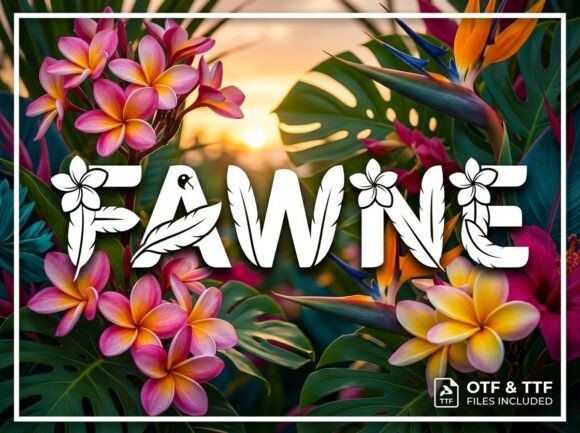
The Fawne font embodies this philosophy perfectly. It is described as a "stunning decorative display font designed to be the center of attention." This immediately signals its role: it is not a workhorse for body text but a specialized tool for high-impact visual communication.
The Anatomy and Purpose of the Fawne Typeface
Fawne is categorized as an ALL-CAPS uppercase-only display typeface. This is a critical characteristic that shapes its entire application. Let's break down what this means for designers and creators.
1. The Power of All-Caps Design
An all-caps font consists solely of uppercase letters, numerals, and punctuation. This design choice is intentional and powerful. In typography, all-caps text is inherently louder and more assertive than mixed-case text. It commands the page, making it ideal for:
- Bold Headlines: A headline set in Fawne will immediately grab the reader's eye, setting the tone for the entire layout.
- Artistic Logos: The uniform height and strong baseline of all-caps create a sense of stability, authority, and brand confidence.
- Creative Packaging: On a product shelf, where consumers make split-second decisions, Fawne’s distinctive shapes can differentiate a brand and communicate its creative ethos instantly.
However, this strength also dictates its limitation. The absence of lowercase letters means Fawne is not suitable for writing sentences, articles, or any context where the nuanced rhythm of ascenders (like 'b', 'd', 'h') and descenders (like 'g', 'p', 'y') is needed for comfortable reading.
2. The Artistic and Professional Finish
Despite its decorative nature, Fawne is noted for maintaining a "professional and polished finish." This balance is the hallmark of a well-crafted typeface. It avoids the pitfall of many novelty fonts that sacrifice legibility for style. Each letter in Fawne is described as a "work of art," suggesting careful attention to:
- Consistent Stroke Weight: Ensuring the font feels cohesive, not chaotic.
- Harmonious Spacing: Proper kerning (space between letters) so words flow naturally even at large sizes.
- Unique Artistic Elements: These could be subtle serifs, swashes, ligatures, or stylistic alternates that give the font its "strong visual personality."
This professionalism makes Fawne versatile. It can be used in a sleek corporate logo for a creative agency or in the vibrant packaging for an artisanal product, adapting its decorative flair to the context while always looking intentional and refined.
Practical Applications: Where Fawne Shines
Understanding a font's purpose is one thing; seeing its practical relevance is another. Fawne is engineered for specific, high-visibility scenarios. Here’s how it fits into modern creative work:
In Branding and Logo Design
A logo is the cornerstone of brand identity. Using a font like Fawne can instantly communicate that a brand is creative, bold, and distinctive. Imagine a boutique coffee roaster using Fawne for its name on packaging and signage. The font’s decorative nature suggests craftsmanship and attention to detail, aligning with the artisanal product. Conversely, a tech startup focused on innovation might use Fawne in its logo to project a forward-thinking and unconventional image.
In Marketing and Advertising
In the crowded space of digital ads, social media posts, and posters, capturing attention in milliseconds is critical. A headline set in Fawne, with its unique letterforms, can stop a scrolling thumb. It’s perfect for event promotions, album covers, movie titles, or sale announcements where the goal is to create excitement and intrigue.
In Creative Packaging and Editorial Design
Product packaging is a silent salesman. Fawne can elevate a product from ordinary to premium. For example, on the label of a luxury candle or a bottle of gourmet sauce, Fawne can convey sophistication and uniqueness. In editorial design, such as magazine covers or chapter headings in a book, it can add a layer of artistic expression and thematic depth.
Technical Considerations: OTF vs. TTF Files
When you acquire a professional font like Fawne, you typically receive it in multiple file formats. Understanding these formats is part of being a competent designer or content creator.
- OTF (OpenType Font): This is the professional standard. OTF files support advanced typographic features like ligatures, stylistic sets, and extensive character sets. They are preferred for advanced design software (Adobe Creative Suite, Affinity Suite) because they offer greater control and typographic finesse.
- TTF (TrueType Font): This is the universal compatibility format. TTF files work seamlessly across almost all operating systems and basic applications, including Microsoft Word, PowerPoint, and many web platforms. They are the go-to for ensuring a design looks correct on the widest range of devices.
Providing both OTF and TTF files ensures that Fawne can be used in professional design workflows (where OTF’s features are leveraged) and in everyday applications (where TTF’s compatibility is key).
Clarifying Common Misunderstandings
A frequent misconception about decorative fonts is that they are "hard to read." While it's true that a font like Fawne is not meant for a novel, this doesn't equate to illegibility in its intended context. At the large sizes used for headlines and logos, its unique design is perfectly clear and effective. The key is using the right tool for the right job. You wouldn’t use a scalpel to chop wood, nor would you use Fawne for a legal contract.
Another assumption is that all-caps fonts are monotonous. Skilled type designers build variety into these fonts. Fawne may include stylistic alternates—different versions of the same letter (e.g., multiple styles of 'A' or 'S')—that allow designers to customize the look and avoid repetition, adding even more artistic control.
Conclusion: Embracing Intentional Typography
The Fawne font is more than just a collection of letter shapes; it is a statement of intent. It represents a choice to prioritize visual impact, artistic expression, and brand personality over the mundane utility of body text. In a world saturated with generic visuals, a typeface like Fawne offers a way to break away from the ordinary and create designs that resonate on an emotional level.
For creators—whether they are graphic designers, marketers, entrepreneurs, or artists—understanding the role of such specialized tools is fundamental. It allows for more intentional design choices that align with project goals and audience expectations. Fawne, with its polished decorative style and versatile application, is a powerful asset in the typographer's toolkit, reminding us that in design, how something is said is often as important as what is said.