Calima: Integrating Architectural Boldness into Your Design Workflow
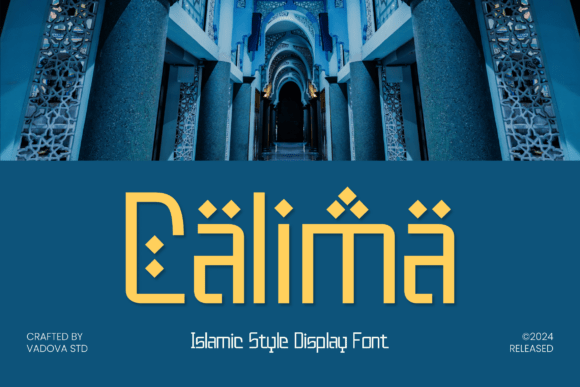
In the landscape of contemporary design, typography is often treated as a secondary decision—something applied after the core layout is established. However, for projects requiring structural integrity and cultural resonance, the typeface must be part of the foundational planning phase. Calima, an Islamic-style font characterized by its strong verticality and block-like construction, is a prime example of a typeface that dictates the architecture of a design rather than merely decorating it. Drawing inspiration from the geometric precision of Kufic script, Calima offers a sturdy, architectural presence that demands a specific approach to implementation.
The Structural Foundation of Calima
Understanding Calima requires an appreciation for its structural DNA. Unlike fluid, script-based fonts that suggest movement, Calima is built on the principles of stability and weight. Its unique stacked diacritics and square proportions make it a powerhouse for large-scale applications. When you integrate Calima into your workflow, you are not simply selecting a font; you are selecting a construction material. It functions visually like masonry—stacked, interlocking, and immovable.
This characteristic makes it distinct from standard serif or sans-serif families. The "block-like" nature means that it occupies space aggressively. For designers and creators, this changes the planning phase of a project. You cannot simply swap Calima into a template designed for a lighter typeface like Helvetica or Garamond. The margins, leading (line spacing), and tracking must be adjusted from the outset to accommodate its vertical dominance. Ignoring this step usually results in layouts that feel cramped or unbalanced.
Workflow Integration: Planning and Preparation
For the professional or entrepreneur managing a branding project, the decision to use Calima should be made during the conceptualization phase. This is particularly true for projects involving heavy-duty cultural branding or architectural signage. Before sketching layouts, consider the environment where the design will live. Calima excels in environments where it must compete with noise—visual or physical.
When planning a design system using Calima, establish a clear hierarchy early. Because the font is so bold and geometric, it creates a high-contrast pairing with lighter, more neutral body text. A practical workflow tip is to define your secondary typeface first. Since Calima will handle the "heavy lifting" of headlines and signage, your supporting font needs to be highly legible and understated. This prevents visual competition and ensures the "cinematic" quality of Calima shines through without overwhelming the viewer.
Practical Implementation in Digital and Physical Spaces
The versatility of Calima lies in its ability to bridge the gap between digital assets and physical environments. Its design is optimized for clarity at a distance, making it a superior choice for wayfinding and environmental graphics. However, implementing it requires a nuanced understanding of context.
Large-Scale Signage and Environmental Design
When working on architectural signage, the primary concern is usually legibility from varying angles and distances. Calima’s verticality and square proportions address this naturally. In your production workflow, ensure that the vector conversion of the typeface preserves the sharp, hard edges of the letterforms. Anti-aliasing should be handled carefully in digital displays; the font is designed to look crisp, and excessive blurring can destroy its architectural aesthetic.
For physical installations, consider the material interaction. Calima works exceptionally well when laser-cut from metal, routed into wood, or cast in concrete. The block-like construction translates efficiently to manufacturing processes because it minimizes complex curves that are difficult to fabricate. If you are a small business owner commissioning signage, providing your fabricator with a font like Calima can actually streamline the production process, reducing costs associated with intricate detailing.
Digital Branding and Cinematic Titles
In the digital realm, Calima finds its home in hero sections of websites, title cards for video content, and high-impact social media graphics. The "cinematic" quality of the font comes from its weight and gravity. It implies importance and permanence.
When using Calima for web design, performance and rendering are key technical considerations. Because the strokes are heavy and the geometry is complex, file size optimization is crucial. Use modern web font formats like WOFF2 to ensure fast load times. Furthermore, because of its strong vertical lines, Calima pairs well with wide-screen aspect ratios. When designing for video or widescreen monitors, allow the letters to breathe. Generous letter-spacing (tracking) can enhance the architectural feel, turning the text into a texture rather than just a string of characters.
Strategic Use Cases and Decision Making
Deciding when to use Calima is as important as knowing how to use it. It is a specialty tool, not a universal one. Using it for long-form body copy would be a mistake, as the eye fatigues quickly when reading dense blocks of heavy, geometric text. Instead, reserve it for moments of impact.
Cultural Branding and Identity
For brands that want to convey strength, heritage, or modernity with a nod to tradition, Calima is an ideal choice. It fits well into the branding workflow of cultural institutions, architectural firms, or luxury brands that value structure. In this context, Calima acts as the "voice" of the brand. During the brand identity phase, create a style guide that strictly defines the usage of Calima. Specify its use for H1 headers, pull quotes, and logos. This ensures consistency across all touchpoints, from business cards to billboards.
Editorial and Publishing Workflows
Publishers and bloggers can utilize Calima for article titles to grab attention immediately. The font's heavy-duty nature stands out in a crowded RSS feed or social media scroll. However, integration requires discipline. If you are a content creator using a platform like WordPress or Medium, you may need to inject custom CSS to ensure Calima renders correctly, as default theme settings often favor standard web-safe fonts. This technical step is vital for maintaining the visual integrity of your content across different devices.
Technical Considerations and Quality Control
Integrating a specialized font like Calima into a professional workflow requires attention to technical details. Quality control is not just about spelling; it is about typographic integrity.
Spacing and Kerning
Due to its square proportions, Calima may require manual kerning adjustments in specific letter pairings, particularly when mixing uppercase and lowercase elements. In design software like Adobe Illustrator or Figma, take the time to review headlines character by character. The goal is to maintain the "stacked" illusion; uneven spacing can break the visual continuity of the block-like forms.
Compatibility and Licensing
Before finalizing a project, verify the font licensing. If you are using Calima for a client’s branding or commercial signage, ensure you have the appropriate commercial license. This is a standard part of the professional workflow but is often overlooked in the excitement of the design process. Additionally, test the font across different operating systems and browsers if the project is digital. While modern web standards are robust, the unique rendering of heavy geometric fonts can occasionally vary between rendering engines.
Conclusion: Building with Intention
Calima is more than just a typeface; it is a structural element. By drawing inspiration from the enduring strength of Kufic script, it offers a solution for projects that require boldness, clarity, and architectural presence. For the modern creator, marketer, or designer, integrating Calima means moving beyond decoration and embracing construction. It requires a workflow that prioritizes planning, respects the medium, and values the impact of visual weight. When implemented correctly, Calima does not just display words—it builds a foundation for the message.