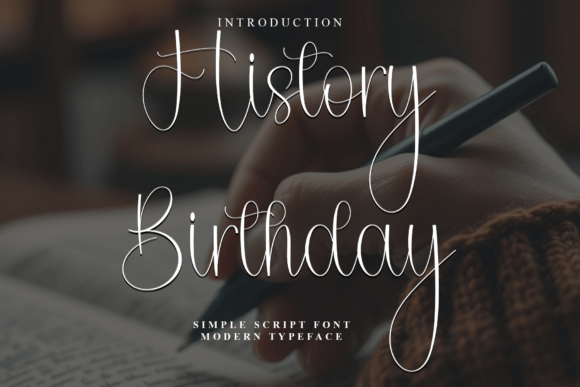
History Birthday: A Festive Typeface for Holiday Magic
Capturing the warmth and joy of the holiday season in a design project requires more than just good imagery; it demands typography that speaks the same language. History Birthday is a typeface designed specifically to bridge that gap. It is a festive and merry font that brings a whimsical flair and a touch of enchantment to any visual composition. Whether you are a small business owner looking to create a memorable holiday campaign or a hobbyist crafting personalized gifts, understanding how to leverage this decorative style can elevate your work from ordinary to magical.
What Makes History Birthday Special?
At its core, History Birthday is a display typeface. This means it is designed to be used for headlines, titles, and short bursts of text where visual impact is the priority. Unlike standard serif or sans-serif fonts used for body text, this font prioritizes personality. It captures a cheerful and nostalgic ambiance, making it ideal for projects that need to evoke feelings of celebration and tradition.
The design features decorative elements that mimic the elegance of hand-lettering often found on vintage greeting cards. However, it retains enough clarity to remain legible in digital and print formats. For the modern creator, this balance is essential. You want a font that looks artistic but doesn't confuse the reader.
The Power of PUA Encoding
One of the most significant technical advantages of History Birthday is its PUA (Private Use Areas) encoding. For those new to typography, this is a crucial feature. PUA encoding ensures that all the special characters, glyphs, and ligatures within the font are fully accessible.
Standard fonts sometimes hide these extra stylistic options, requiring advanced design software to unlock them. Because History Birthday is PUA encoded, you can access these unique flourishes using standard character maps on Windows or Mac, or through basic design apps. This democratizes the design process, allowing beginners to use professional-level decorative elements without a steep learning curve.
Practical Applications and Use Cases
The versatility of History Birthday extends across various mediums. Its primary strength lies in holiday-themed projects, but its application is broad. Here are some practical ways to integrate this typeface into your workflow:
- Greeting Cards and Invitations: This is the most natural fit. The font’s whimsical nature makes it perfect for the front cover of holiday cards, birthday invitations, or New Year’s party invites. It sets the tone immediately, letting the recipient know a celebration is in order.
- Gift Tags and Packaging: Small business owners can use this font to create custom gift tags for their products during the holiday season. It adds a high-end, boutique feel to packaging without requiring a massive budget.
- Social Media Graphics: Bloggers and marketers can use History Birthday to create eye-catching headers for holiday sale announcements or festive blog posts. The decorative style helps stop the scroll and draw attention to the message.
- Event Decor: Beyond paper, this font works well for digital event materials, such as menus for a holiday dinner, program covers, or even custom t-shirt designs for family reunions or office parties.
Who Benefits from This Typeface?
While the aesthetic is clearly festive, the utility of History Birthday applies to a wide range of users:
- Freelance Designers: Having a library of high-quality, PUA-encoded decorative fonts saves time when clients request holiday-themed assets.
- Educators: Teachers can use the font to create engaging classroom materials, worksheets, or awards for students during the end-of-year holidays.
- DIY Enthusiasts: If you enjoy scrapbooking or creating personalized home decor, History Birthday offers a professional polish that standard system fonts lack.
Key Considerations Before Using History Birthday
To ensure your designs remain professional and effective, there are a few best practices to keep in mind when working with decorative typefaces like History Birthday.
Readability is Key: Because the font has decorative elements and "whimsical flair," it is not suitable for long paragraphs of text. If you use it for a sentence longer than ten words, ensure the font size is large enough to read easily. Reserve it for headers and short statements.
Pairing Fonts: A common mistake is using two decorative fonts together. History Birthday pairs best with a simple, clean sans-serif font (like Arial, Helvetica, or Open Sans) for any supporting text. This contrast allows the decorative font to shine without overwhelming the design.
Context Matters: While it is versatile, the "festive and merry" nature of the font might feel out of place in formal corporate communications or serious academic papers. It is best suited for lighthearted, celebratory, or creative contexts.
Ultimately, History Birthday is a tool for adding joy to your projects. By understanding its strengths—its nostalgic charm and accessible technical features—you can effectively use it to spread holiday cheer in your personal and professional designs.