Grove: A Strategic Asset for Distinctive Brand Communication
In a saturated digital landscape, the choice of typography is a foundational element of brand strategy. It is not merely a decorative decision but a communication one. The Grove typeface is a striking decorative display font engineered to command attention and convey a strong, artistic personality. For professionals—from entrepreneurs to marketers and creators—understanding how to deploy such a tool intentionally can be the difference between blending in and making a memorable impact.
Understanding the Core Characteristics of Grove
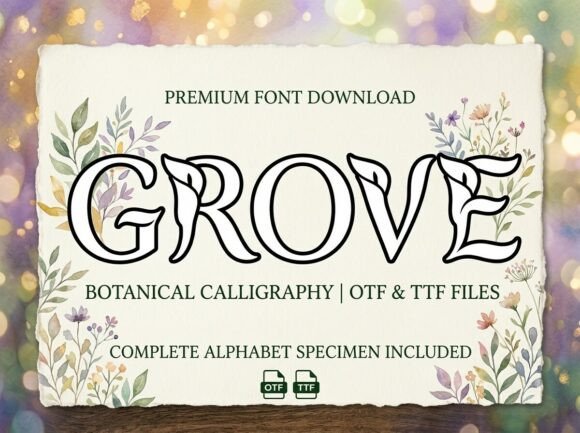
Grove is not a workhorse text font for body copy. It is a specialized instrument. Its design features unique artistic elements and a powerful visual presence, making it an ALL-CAPS, uppercase-only display typeface. This characteristic is fundamental to its strategic use. It does not include lowercase letters, meaning it is specifically crafted for high-impact scenarios where every letterform functions as a standalone piece of art. This design philosophy directs its application toward bold headlines, artistic logos, and creative packaging, where its polished finish can shine without compromise.
Practically, when you acquire Grove, you receive two industry-standard files: an OTF (OpenType Font) for advanced design software and a TTF (TrueType Font) for universal compatibility. This ensures that the font's integrity is maintained whether you are working in professional layout applications or ensuring it renders correctly across various devices and platforms.
Strategic Applications: When and Why to Choose Grove
Deploying Grove should be a deliberate choice aligned with specific communication goals. Its strength lies in situations demanding visual hierarchy and emotional resonance.
- Brand Identity and Logo Design: For a brand seeking to project creativity, boldness, and a distinct identity, Grove can serve as the cornerstone of its logotype. It is particularly effective for businesses in creative industries, artisanal markets, or those targeting a design-savvy audience. The all-caps format conveys confidence and stability.
- Marketing Headlines and Hero Sections: In digital or print campaigns, the primary headline must arrest attention within seconds. Using Grove for a hero headline on a website, poster, or social media graphic can immediately establish tone and draw the viewer into the message. Its decorative nature ensures it is not skimmed over.
- Packaging and Product Presentation: On a shelf or in an unboxing video, packaging tells a story. Grove can elevate product labels, especially for luxury goods, specialty foods, or boutique items, where the typography itself communicates premium quality and artisanal care.
- Event Branding and Invitations: For launches, galas, or exclusive events, the typography sets the expectation. Grove can create a sense of occasion, artistry, and exclusivity on invitations, banners, and digital event pages.
Integrating Grove into Your Design and Brand Strategy
Adopting a font like Grove requires more than just installation; it requires a plan. Consider these steps for intentional integration:
- Define the Context and Audience: Who needs to see this, and what is the core message? Grove excels with audiences that appreciate design and aesthetics. It may be less effective for formal corporate communications requiring a neutral tone. Ensure the font's personality aligns with your brand voice and the specific project's intent.
- Pair with Purpose: A display font like Grove demands a complementary partner. For any body text, subheadings, or supporting information, you will need a highly legible, simpler font (such as a clean sans-serif or serif). This pairing creates a clear visual hierarchy: Grove for impact, the secondary font for clarity and flow.
- Use Sparingly for Maximum Effect: Because of its strong character, overusing Grove can overwhelm a design and dilute its power. Reserve it for key elements—a main headline, a logo lockup, or a primary call-to-action. This selective use ensures it remains a strategic highlight rather than a visual distraction.
- Test for Readability in Context: Always test how Grove renders at the intended size and in the intended environment. A font that looks stunning at 72pt on a screen may become illegible at 14pt on a mobile device. Ensure its artistic details do not hinder comprehension of the core message.
Navigating Limitations and Potential Pitfalls
The very qualities that make Grove powerful also define its limitations. Acknowledging these is part of strategic decision-making.
The most significant constraint is its uppercase-only nature. This means it cannot be used for running text, paragraphs, or any content requiring lowercase letters for grammatical correctness or natural reading flow. Attempting to force it into such a role would result in a poor user experience and a breakdown in communication. Its role is purely for display and emphasis.
Furthermore, its decorative style may not suit every brand or message. Using it for a serious financial institution or a medical service might create a dissonant tone. The risk of using Grove without clear goals or context is creating visual noise that confuses your audience rather than clarifying your value proposition. It should amplify your message, not obscure it.
Achieving Long-Term Value with Intentional Typography
Typography is a long-term investment in brand equity. Choosing a distinctive font like Grove is a commitment to a specific visual identity. To leverage it for long-term results:
- Document Its Usage: Create clear brand guidelines that specify exactly where and how Grove is to be used (e.g., "Primary headline font for all campaign hero images," "Logo lockup only"). This ensures consistency across all creators and touchpoints.
- Align with Brand Evolution: Consider if Grove will still represent your brand effectively in three to five years. While trends change, a well-chosen distinctive font can become a timeless part of your identity if it truly reflects your core values.
- Measure Impact: Where possible, gauge the effectiveness of designs using Grove. Does a landing page with a Grove headline have a higher engagement rate? Does packaging featuring it receive more positive feedback? Use data to inform future typographic choices.
Ultimately, Grove is a strategic tool for creators and professionals who understand that every visual detail communicates. It is not about using a fancy font for its own sake, but about selecting a precise instrument to achieve a specific communicative goal—be it capturing attention, conveying artistry, or building a memorable brand. By using it intentionally, within its designed context, and in concert with other design principles, you can harness its power to make a lasting and positive impression.