Evaluating Collage: The All-Caps Serif for Distinctive Branding
In the crowded landscape of display typography, finding a typeface that balances personality with legibility can be a significant challenge for designers. The Collage typeface presents itself as a solution for projects requiring high-impact visual interest without sacrificing structural integrity. This article offers a professional evaluation of the Collage font, examining its characteristics, practical applications, and overall value for creative professionals.
Core Characteristics and Design Philosophy
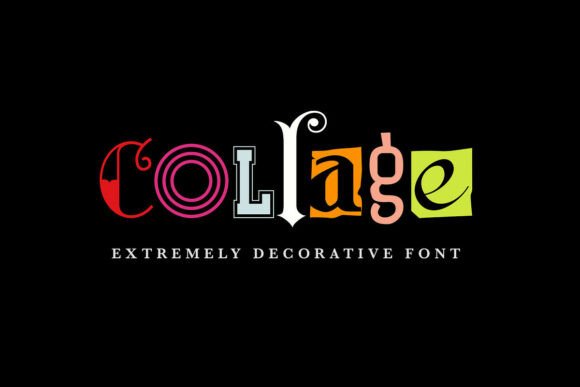
Collage is fundamentally an all-caps serif font, but its defining feature is the intentional variation within its character set. Unlike traditional typefaces where uniformity is prized, Collage is designed so that every letter possesses its own distinctive style. This is not random inconsistency; it is a curated collection of alternative shapes and forms. The font family includes multiple versions of each glyph, allowing designers to mix and match to create a truly unique typographic texture.
The design philosophy leans into a playful, eclectic aesthetic. The serifs are present but often manipulated, with varying weights, angles, and decorative elements applied across the different letterforms. This creates a dynamic rhythm when words are set in Collage, avoiding the monotony that can sometimes accompany all-caps compositions. The inclusion of numerals and essential punctuation marks makes it a more complete tool for headline and titling work, extending its utility beyond simple lettering.
Practical Applications and Project Suitability
The primary strength of Collage lies in its ability to command attention in short-form text. Its detailed, varied letterforms are optimized for eye-catching headlines, poster designs, and branding projects where a strong, unconventional voice is needed. It performs exceptionally well in contexts where typography itself is a key visual element, rather than merely a vessel for information.
Specific use cases where Collage demonstrates high effectiveness include:
- Poster and Editorial Design: For magazine covers, event posters, or book titles, Collage provides an immediate focal point with its whimsical character.
- Branding and Logo Systems: For brands targeting a youthful, creative, or eclectic audience, the font can form the core of a distinctive logotype. It is particularly well-suited for kids content, educational materials, and playful consumer products.
- Apparel and Merchandise: The font's detailed nature translates well to t-shirt designs, tote bags, and packaging, where it can create standout graphics that feel handcrafted and unique.
- Digital and Social Media: In the fast-scrolling environment of social platforms, Collage's visual complexity can stop thumbs. It is effective for social media graphics, Instagram stories, and YouTube thumbnails.
Evaluating Usability and Workflow Integration
From a practical workflow perspective, the usability of Collage depends on understanding its intended scope. It is a display font, meaning it is not designed for body copy or long paragraphs. Its detailed forms would reduce readability at smaller sizes and in dense text blocks.
The inclusion of multiple alternative shapes is its most powerful feature for customization. In professional design software like Adobe Illustrator or Photoshop, designers can use OpenType features or manually select from the alternate glyphs to build words that have a hand-assembled, collage-like effect. This allows for a high degree of creative control, enabling the typography to feel truly bespoke rather than generic.
However, this flexibility also introduces a consideration: time. Crafting a headline in Collage to its full potential requires more typographic decision-making than using a standard font. Designers must evaluate the interplay between adjacent letters, choosing alternates that create pleasing shapes and counter-shapes. For projects on a tight deadline or requiring a very specific, consistent message, this level of involvement must be factored into the planning.
Audience Fit: Who Benefits Most from Collage?
Collage is not a universal tool. Its value is highest for professionals and creators whose work thrives on visual personality and distinction. The following audiences are likely to find the most utility:
- Graphic Designers and Branding Specialists: Those working on projects for clients in entertainment, children's products, education, or creative services will find Collage a valuable asset in their typographic toolkit.
- Marketers and Content Creators: Individuals creating social media graphics or digital ads for brands with a vibrant, energetic identity can leverage Collage to break through visual noise.
- Small Business Owners and Entrepreneurs: Particularly for those in the artisan, craft, or lifestyle sectors, Collage can help establish a brand identity that feels hands-on, imaginative, and distinct from corporate competitors.
- Educators and Publishers: For materials aimed at engaging younger audiences or conveying a sense of fun and creativity in learning, the font's playful nature is a direct asset.
Conversely, Collage would be a poor choice for formal corporate communications, legal documents, academic papers, or any context where neutrality, extreme legibility at small sizes, and conservative professionalism are paramount.
Strengths, Limitations, and Long-Term Value
The strength of Collage is its undeniable visual impact and the creative control offered by its alternate glyphs. It solves a specific problem: the need for a typeface that is both serif-based (offering a nod to tradition) and radically individualistic.
A potential limitation is its niche appeal. Its eclectic style, while perfect for some projects, could clash with design systems that require strict consistency or minimalist aesthetics. Furthermore, the very feature that makes it special—the variety of letterforms—requires a thoughtful application to avoid appearing chaotic or disjointed.
In terms of long-term value, Collage is likely to remain a specialist asset rather than a workhorse. Trends in typography shift, but display fonts with strong, unique personalities often find perennial use in specific sectors. For designers who regularly work on projects that call for this style, investing in a font like Collage can pay dividends in the ability to quickly produce compelling, custom-looking typography. It should be viewed as a creative tool for specific jobs, not a replacement for fundamental type families.
Ultimately, the decision to integrate Collage into a design workflow should be based on a clear assessment of project requirements. If the goal is to inject playfulness, individuality, and a strong visual voice into headlines and logos, Collage is a credible and thoughtfully constructed option worth serious consideration.