Apian: A Decorative Display Font for Distinctive Creations
Understanding the Role of a Display Typeface
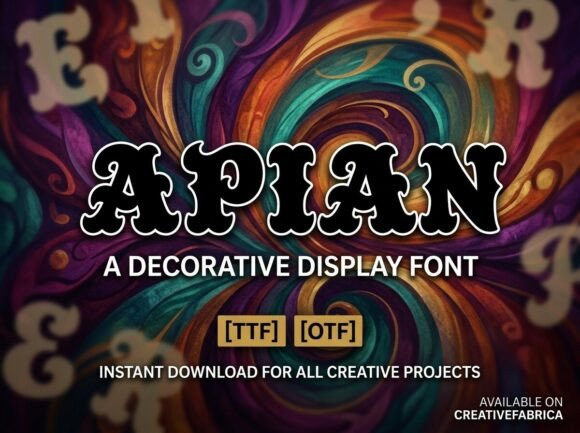
In the vast world of digital typography, the choice of font is rarely just about legibility; it is often about voice, mood, and immediate impact. While body text requires a certain neutrality to ensure comfortable reading over long passages, display typography operates under different rules. This is where typefaces like Apian come into play. Designed specifically as a decorative display font, Apian is engineered to function as the visual centerpiece of a layout. It is not intended for writing paragraphs or fine print. Instead, its purpose is to command attention in headlines, logos, and branding elements where a strong, artistic character is required.
The distinction between a standard workhorse font and a display typeface like Apian is crucial for designers and creators to understand. Standard fonts prioritize uniformity and readability at small sizes, whereas Apian prioritizes distinct artistic elements and a "strong character." This makes it a specialized tool. For professionals looking to break away from the ordinary or the ubiquitous "safe" choices found in default software libraries, a typeface with this level of personality offers a way to inject high-end aesthetics into a project without needing complex illustration. It serves as a bridge between standard text and custom lettering, providing a ready-made solution for those who want their typography to do the heavy lifting in terms of style.
The Practical Impact of "Breaking Away from the Ordinary"
One of the most common challenges in modern design is differentiation. With millions of websites, packaging designs, and social media graphics competing for attention, visual sameness is a real risk. Using a font like Apian addresses this issue by providing a distinct visual signature. When a viewer sees a headline set in a typeface with unique artistic elements, it triggers a different cognitive response than a standard sans-serif or serif. It suggests that the content or product being presented is curated, intentional, and perhaps more premium.
For entrepreneurs and small business owners, this psychological signal is valuable. Consider the difference between a generic logo created with a standard system font and one crafted using a typeface designed to be a "centerpiece." The latter immediately communicates a higher level of investment in branding. Apian, with its strong character, allows creators to achieve this effect. It is designed to deliver a "high-end, professional aesthetic," which can help a new brand establish credibility or an established brand refresh its image. This is not merely about looking "pretty"; it is about strategic visual communication that aligns the typography with the brand's value proposition.
Specific Applications: Logos, Titles, and Initials
Understanding the technical constraints of a typeface is just as important as appreciating its style. Apian is an All-Caps display typeface. This technical specification is a vital piece of information for anyone considering it for their workflow. By design, it does not contain lowercase letters. This is not a defect or an oversight; it is a stylistic choice that shapes how the font should be used.
Because it is all-caps, Apian is exceptionally well-suited for specific applications where impact is paramount. These include:
- Logos and Wordmarks: All-caps designs often convey stability, authority, and confidence. For a brand that wants to appear established and bold, this style works effectively.
- Headlines and Titles: In editorial design or web design, a bold all-caps headline grabs the eye immediately. It creates a strong horizontal line that anchors the layout.
- Decorative Initials: In publishing or luxury branding, using a large, decorative capital letter to start a section or a name is a classic technique to add elegance.
- Packaging Design: On physical products, the typography must often be readable from a distance. All-caps display fonts handle this requirement well, particularly for product names or flavor descriptors.
However, this same characteristic dictates where Apian should not be used. It is not suitable for body copy. Reading long strings of all-caps text is significantly more difficult for the human eye than reading mixed-case text, as we often recognize words by their shape—a feature lost when everything is capitalized. Therefore, a practical workflow involving Apian would pair it with a highly legible serif or sans-serif font for the supporting text. This contrast between a decorative title and a clean body creates a balanced hierarchy that guides the reader’s eye efficiently.
Technical Reliability and File Formats
For designers, the aesthetic value of a font is only realized if it functions correctly within their technical ecosystem. Apian addresses this by including both OTF (OpenType Font) and TTF (TrueType Font) files. Understanding the difference between these formats helps in making an informed decision about how to integrate the font into a project.
The OTF file is generally the preferred format for professional designers using software like Adobe Illustrator, Photoshop, or InDesign. OpenType technology allows for more advanced typographic features and better cross-platform compatibility. It is the standard for high-end design work because it preserves the quality of the vector outlines.
The TTF file ensures "seamless performance across all operating systems." This is particularly relevant for users who may not have access to high-end design suites or who are working within environments like Microsoft Word or PowerPoint. While these programs are not ideal for complex typographic layout, many professionals and hobbyists use them for quick mockups, internal presentations, or basic document creation. By providing a TTF, the font ensures that the visual integrity of the design can be maintained even in non-specialized software environments. This broadens the user base, making Apian accessible not just to graphic designers, but also to marketers, educators, and content creators who use a variety of tools.
Who Benefits Most from Apian?
While the font is versatile within its niche, certain groups will find it particularly useful. Freelance designers looking to expand their library of distinctive display fonts will find Apian a valuable asset for client projects requiring a strong personality. Bloggers and social media managers who need to create scroll-stopping graphics for platforms like Instagram or Pinterest can use it to create text-based images that stand out in a crowded feed.
Publishers and packaging designers also fall squarely in the target audience. The ability to create a "high-end" look without resorting to overly complex or illegible scripts is a significant advantage. For example, a artisanal food brand might use Apian to convey a sense of craftsmanship and quality on their labels. The font does the work of establishing that premium feel, allowing the designer to focus on layout and color.
However, it is important to acknowledge the limitations inherent in a specialized tool. Because Apian is a decorative display font with a strong character, it has a distinct "flavor." It may not be the right choice for projects that require a neutral, corporate, or strictly utilitarian aesthetic. If a brand’s identity is built on minimalism and understatement, a bold, decorative all-caps font might clash with that message. In such cases, comparing Apian against more subdued display options would be a prudent step. The goal is always to match the tool to the specific communication need.
Streamlining the Creative Process
For many creators, the creative process involves a significant amount of decision-making. Choosing the right typography can sometimes be a bottleneck, as the wrong choice can undermine an entire design. By offering a font that is explicitly designed to be a "centerpiece," Apian simplifies one of those decisions. It provides a clear answer to the question: "What font will make this headline or logo feel special?"
This clarity can save time. Instead of experimenting with dozens of generic fonts to find one that has enough personality, a designer can turn to Apian knowing it was built for that specific purpose. Its "distinct artistic elements" serve as a foundation upon which the rest of the design can be built. This efficiency is valuable for professionals working under tight deadlines, as well as for hobbyists who may not have extensive typographic training but still want to achieve a polished, professional result.
Ultimately, Apian is a tool for visual emphasis. It is for the moments in a design where the typography needs to do more than just convey information—it needs to convey emotion, style, and brand identity. When used thoughtfully, in the right context and paired with complementary typefaces, it can elevate a project from the ordinary to the memorable.