Emerson Gothic Font: A Detailed Evaluation for Dark Design Projects
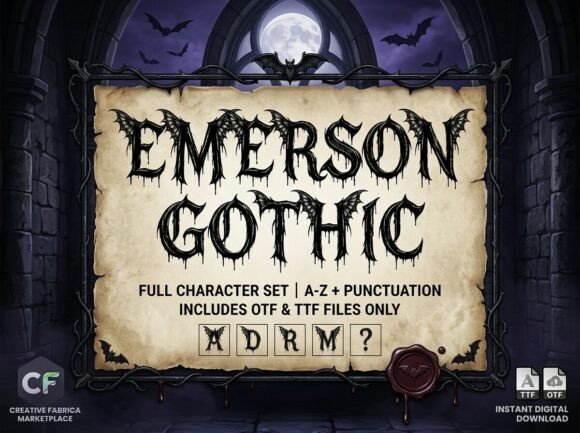
Emerson Gothic is a specialized display typeface designed to evoke a specific, potent atmosphere. Its primary characteristic is the integration of jagged, weathered letterforms with the dramatic addition of realistic bat wings sprouting from the ascenders of letters like 'h', 'k', and 'b'. This design choice moves beyond standard gothic or blackletter fonts, aiming to create an immediate, supernatural silhouette. For designers and creatives working within horror, dark fantasy, or related genres, evaluating a font like Emerson involves balancing its powerful aesthetic impact against practical considerations of legibility and application.
Understanding the Core Design and Intended Use
At its foundation, Emerson is a display font. This means it is engineered for large-scale, short-form text such as headlines, logos, and titles, rather than for body copy. The intricate details of the bat wings and the textured strokes would become muddy and illegible at smaller sizes. Its design language draws from classic gothic horror tropes—decay, mystery, and the supernatural—making it a targeted tool rather than a general-purpose typeface.
Someone interested in Emerson is likely evaluating it for projects where atmosphere is the primary goal. This could include branding for a Halloween event, creating a title sequence for an indie horror game, designing a book cover for a dark fantasy novel, or crafting merchandise for a heavy metal band. The font's value lies in its ability to convey a very specific mood instantly and visually, reducing the need for additional graphical elements to establish the theme.
Key Benefits and Potential Tradeoffs
The most significant benefit of using Emerson is its unmistakable thematic impact. It delivers a "legendary, nocturnal presence" that can set the tone for an entire project. For a designer seeking to avoid generic horror aesthetics, the bat-wing integration offers a unique, memorable twist. It can serve as a central creative element, anchoring a design in its dark subject matter.
However, this strong personality comes with inherent tradeoffs. The first is legibility. The decorative elements, while visually striking, can interfere with the clear recognition of individual letters, especially in complex letter combinations or at a distance. Testing the font with your actual text is crucial. The second tradeoff is versatility. Emerson is not a font that will adapt to many contexts. Its use is largely confined to projects that embrace its gothic horror aesthetic fully. Using it for a corporate newsletter or a children's book would be incongruous and likely ineffective.
Situations Where Emerson is a Strong Fit
Emerson becomes a compelling choice when your project's success hinges on a specific, darkly fantastical vibe. Consider it in the following scenarios:
- Event Branding: For Halloween parties, haunted attractions, or vampire-themed galas, Emerson can create immersive invitations, posters, and signage that immediately set the expected tone for attendees.
- Entertainment Media: It can be effective for title treatments on book covers (especially in the young adult or new adult dark fantasy genre), video game splash screens, or film posters for horror or supernatural thrillers.
- Band Merchandise and Album Art: For metal, darkwave, or gothic rock bands, the font aligns with common visual motifs and can help create cohesive and genre-appropriate merchandise.
- Specialized Branding: A niche brand built around gothic subculture, occult themes, or horror fiction could use Emerson for its logo or key marketing headlines to resonate deeply with its target audience.
When to Consider Alternatives
There are clear situations where another typeface would be more appropriate. If your project requires high readability at small sizes or for extended text, a traditional serif, sans-serif, or even a cleaner blackletter font is necessary. Emerson should never be used for body copy, disclaimers, or detailed instructions.
Furthermore, if your design's horror element is subtle or psychological rather than overtly supernatural, Emerson might feel too literal. Alternatives like distressed serif fonts, elegant blackletter styles with less ornamentation, or even modern sans-serifs with eerie color palettes could achieve a more nuanced effect. If the bat-wing motif is too specific for your needs, exploring other display fonts with different decorative features—like dripping blood, cracked textures, or arcane symbols—might yield a better match.
Practical Decision-Making Insights
Before committing to Emerson, conduct a practical evaluation:
- Test with Your Actual Content: Set your intended headlines or titles in the font. Assess not just the style, but the legibility of each word and letter combination. Pay attention to kerning (the spacing between letters), as ornate fonts often require manual adjustment.
- Consider the Full Design Ecosystem: How will Emerson interact with your chosen color palette, imagery, and layout? Its strong personality might dominate the design, so ensure other elements complement rather than compete with it.
- Evaluate Licensing and Technical Specs: Confirm the font's license covers your intended use (e.g., print, digital, merchandise). Check the available file formats (OTF, TTF, WOFF) for compatibility with your design software and web platforms.
- Prototype and Get Feedback: Create a mockup of your design using Emerson. Show it to a sample of your target audience or colleagues. Does it communicate the intended mood effectively? Is it perceived as impactful or cluttered?
Ultimately, choosing Emerson is a decision to prioritize thematic boldness over subtlety and versatility. It is a powerful tool for a specific job. By aligning its unique strengths with your project's goals and rigorously testing its application, you can determine if its chilling, winged silhouette is the right asset to unleash your dark vision.